Last year, we discovered the adventure of Lauric and Nao, who were preparing for their departure. In the previous article, we explored their past adventure as well as the preparations for their new epic journey. You can find that article here.
Today, we have returned to meet the crew of the Tupaia to retrace their year of sailing.
Sailing across the world’s oceans is a unique adventure. Aboard the Tupaia, a sailboat, a passionate crew embarked on an extraordinary journey, crossing the Atlantic to explore the remote and majestic landscapes of Patagonia. In this interview, the crew shares their experiences, from the Atlantic crossing to the isolated anchorages in the Chilean fjords, offering a captivating glimpse into life at sea and the wonders of our planet.
Did the Atlantic crossing go well?
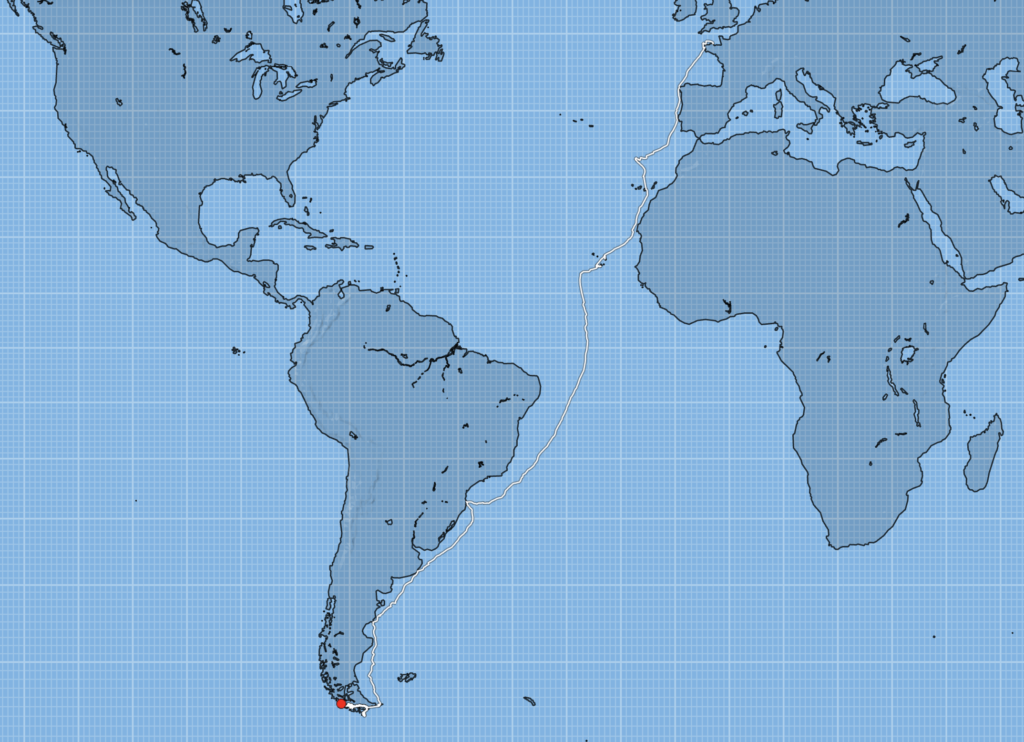
The crossing went very well! We didn’t experience any major technical issues, the weather conditions were generally favorable, and the atmosphere on board was great. We were worried about getting bored during such a long time at sea, but the 76 days of crossing from France to Ushuaia (with 6 stops) passed by very quickly, and we have very fond memories of it.
What did it feel like when you arrived in Brazil?
We hadn’t planned to stop in Brazil, and even after 29 days at sea from Cape Verde, we would have gladly continued on to Argentina. However, bad weather was forecasted, forcing us to seek shelter. After a few hours of studying the map, we spotted a small bay off Florianópolis that seemed suitable and not too far, so we headed there.
The first thing that struck us was the smell of ripe fruit, even though we couldn’t yet see the coast. It intensified as we got closer, and it made us hungry! After just a few hours at anchor, facing a small fishing village and surrounded by tropical forest and white sandy beaches, we felt that we had landed in a great spot and that stopping there was a good decision.
How did you celebrate this first major milestone of your voyage?
We arrived in Brazil on the morning of December 24th, just in time to call family, stock up on fresh fruits and vegetables, beer, and local shrimp. It was perfect for a nice Christmas Eve celebration, just like at home! It wasn’t the snowy, Christmas-tree ambiance, but it was very pleasant.
You’ve been anchoring in incredible places for several weeks now. How is the organization and provisioning going?
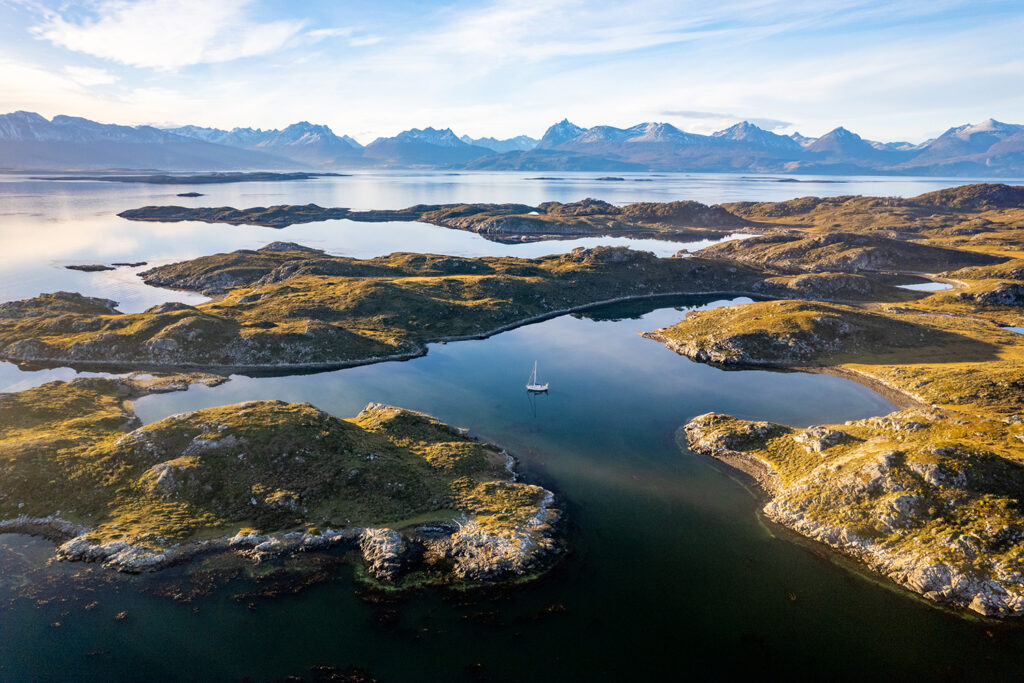
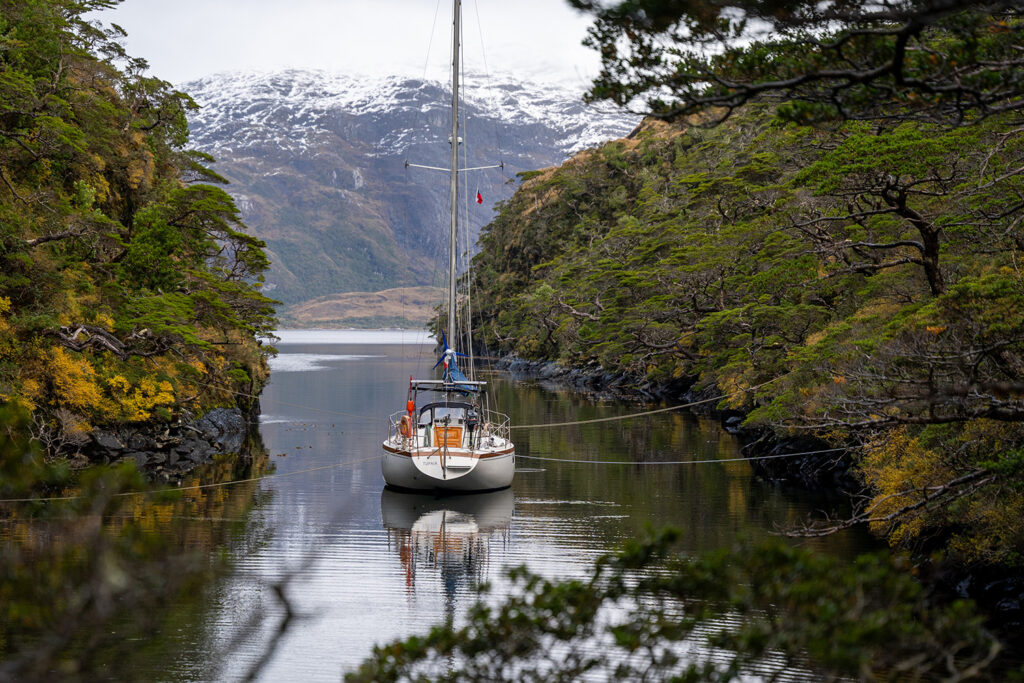
What we love most about sailing is the opportunity to visit remote and untouched places. We have therefore optimized the boat to be as self-sufficient as possible. This mainly involves having large reserves of food, water, and diesel, which allows us to go for 3 months without too many restrictions.
What are the most challenging aspects of managing resources on board?
Resources on board a sailboat are always limited, and we constantly have to monitor our consumption. However, the difficulties depend on where we are. In the tropics, for example, our main constraint was fresh water due to the heat and the lack of available water sources in some places, such as Cape Verde. On the other hand, in the remote areas of Patagonia, fresh water is abundant, but we need to monitor diesel consumption. Diesel is essential not only for engine navigation in the absence of wind but also for heating, as gas stations are located hundreds of kilometers away.
Is life on board a boat in winter still tough?
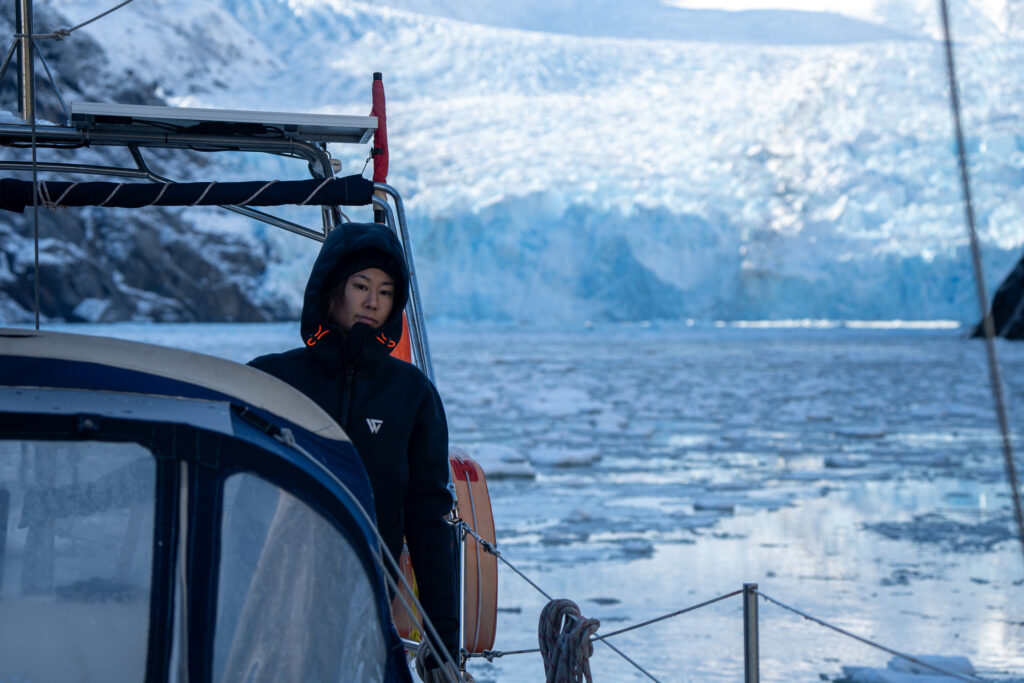
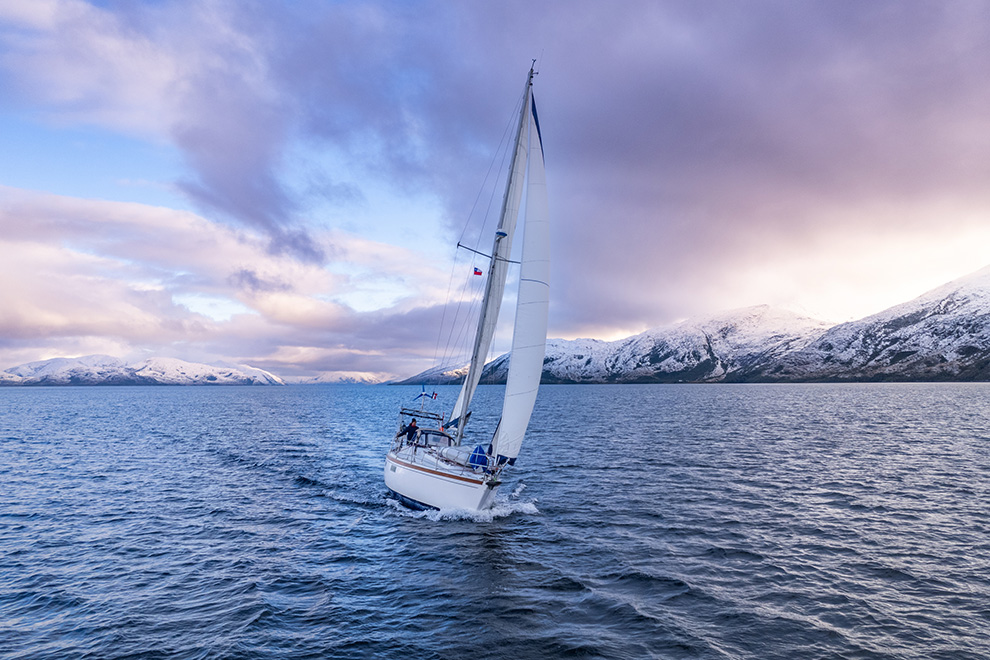
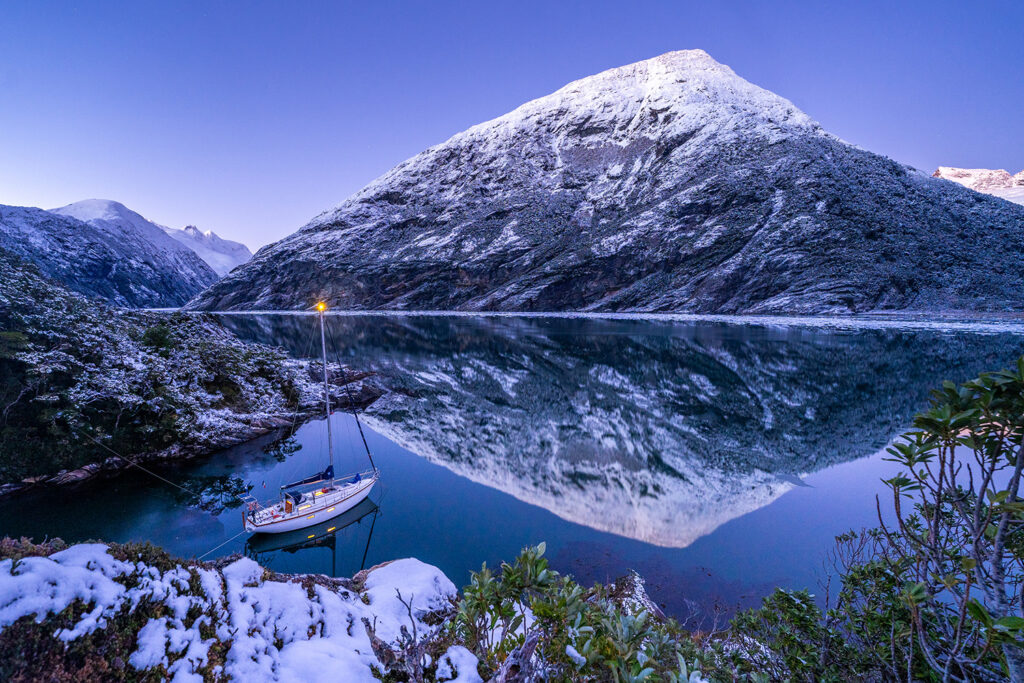
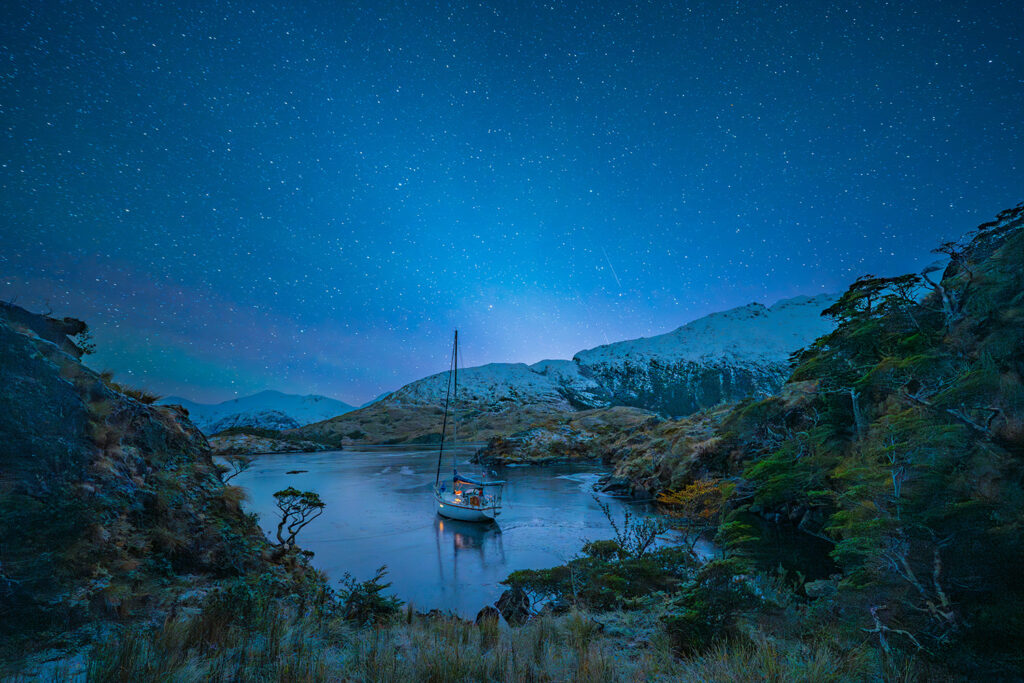
Our boat isn’t equipped for extreme cold, and despite the improvements we’ve made, we expected to have a rather harsh winter. However, even though we sometimes wake up with icicles inside, the stove keeps us warm during the day and makes life on board comfortable. The main difficulties are related to maneuvers during navigation, as our hands and feet get cold quickly, and sometimes the equipment is frozen, making it difficult or even impossible to use. Everything takes a bit more time in the cold, but it’s manageable and worth it.
The grand landscapes of the Chilean fjords look stunning. What does it feel like to be in such a unique setting?
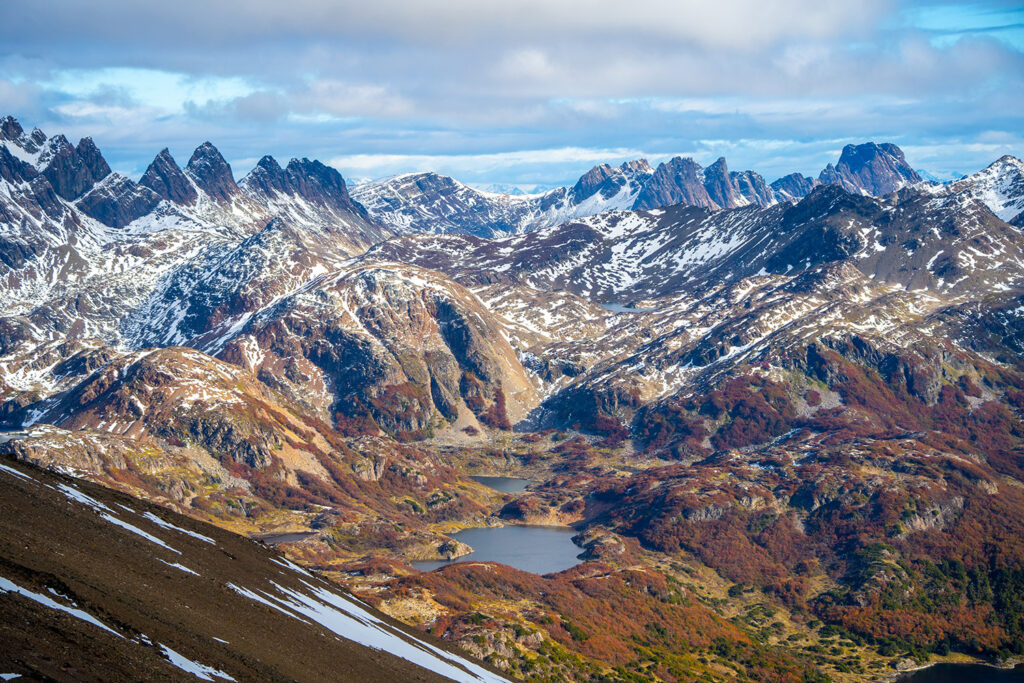
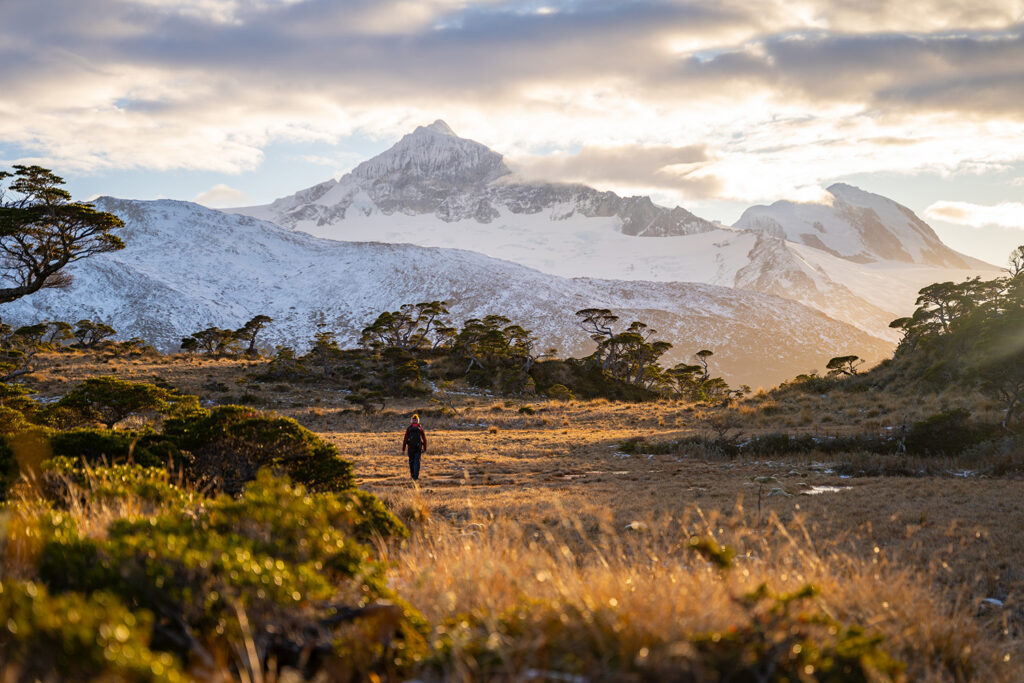
It is truly a privilege to enjoy such grand landscapes from our little floating home. We feel very small in the face of these immense glaciers and endless, untamed nature. Not a day goes by without something new to marvel at.
Do you have any favorite moments or places in the Chilean fjords?
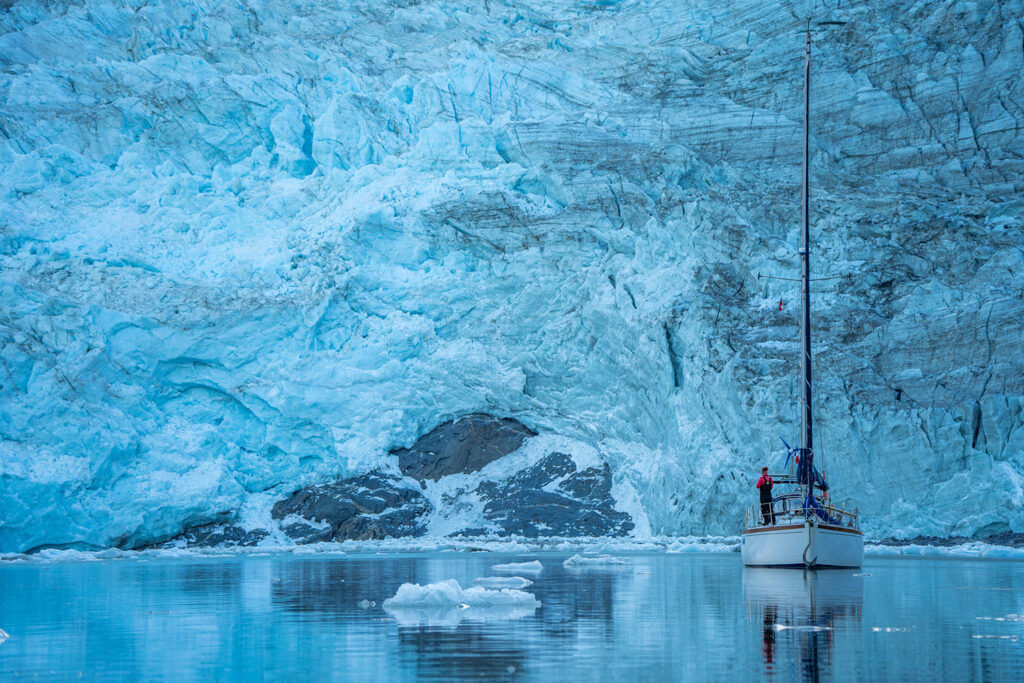
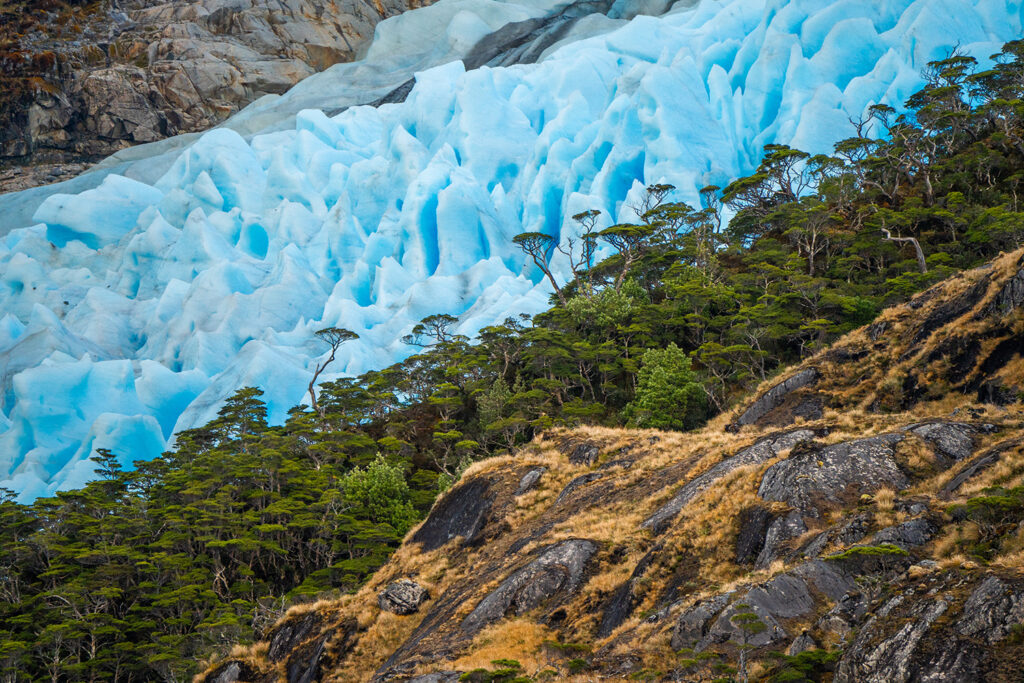
It’s not easy to choose a particular spot since each place has its own charm. However, one area that particularly stood out to us is Seno Garibaldi, which houses the glacier of the same name. We were fortunate to get close to it under a clear blue sky. We witnessed a massive icefall that created a wave that could probably be surfed! The sound of these huge blocks breaking off and crashing down from a height of 50 meters was very impressive. The good news is that we’ve only explored a small part of Patagonia so far, and there’s still much more to discover.
Is there any animal or moment with wildlife that particularly enriched your adventure?
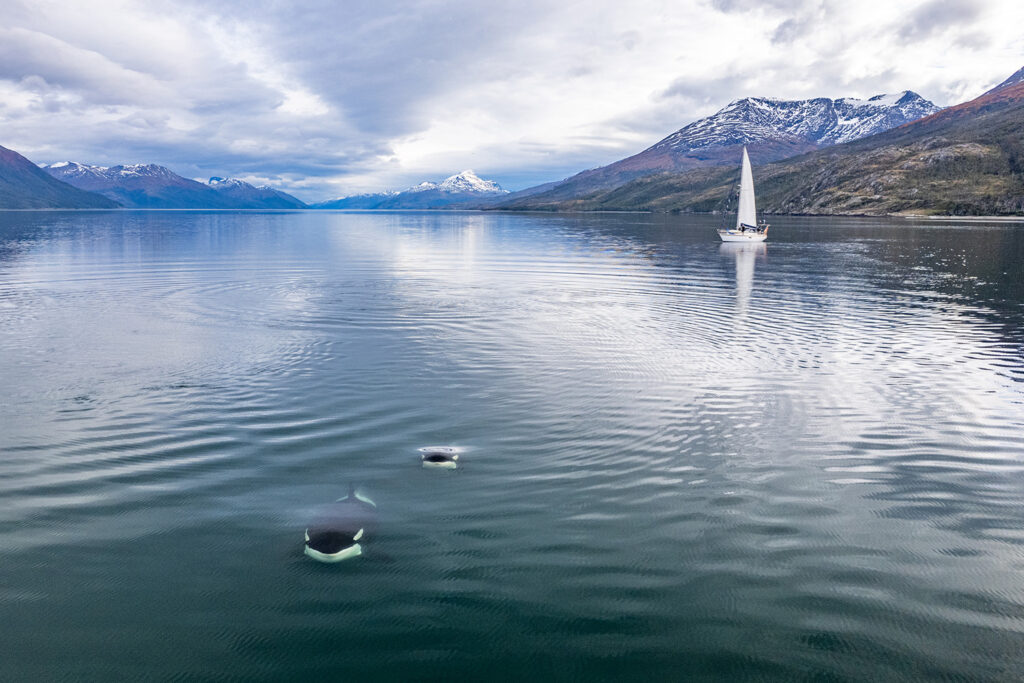
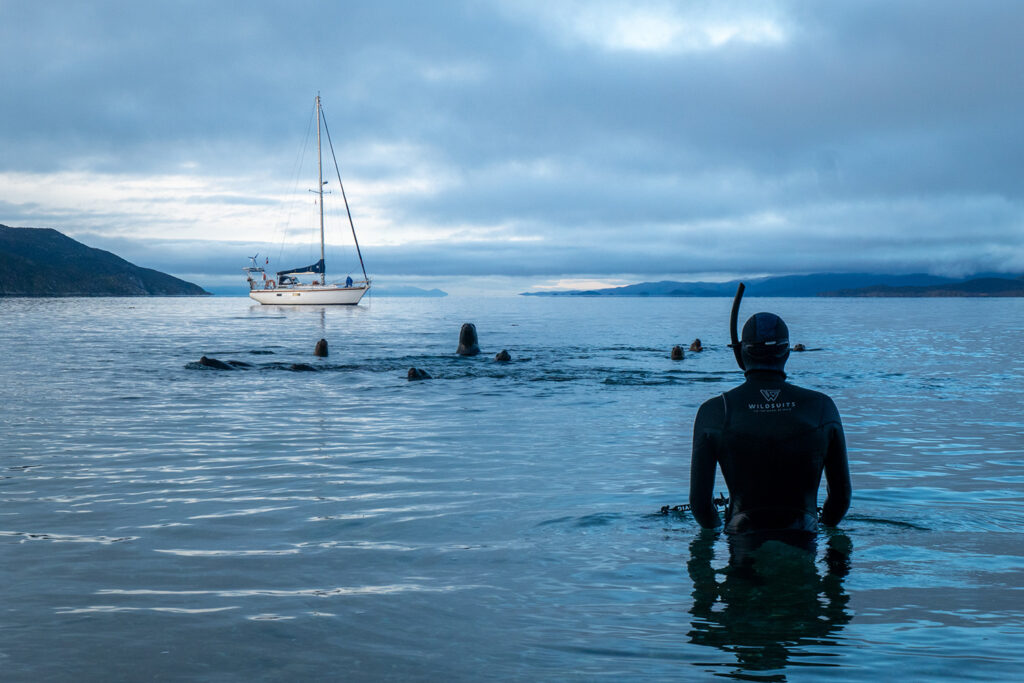
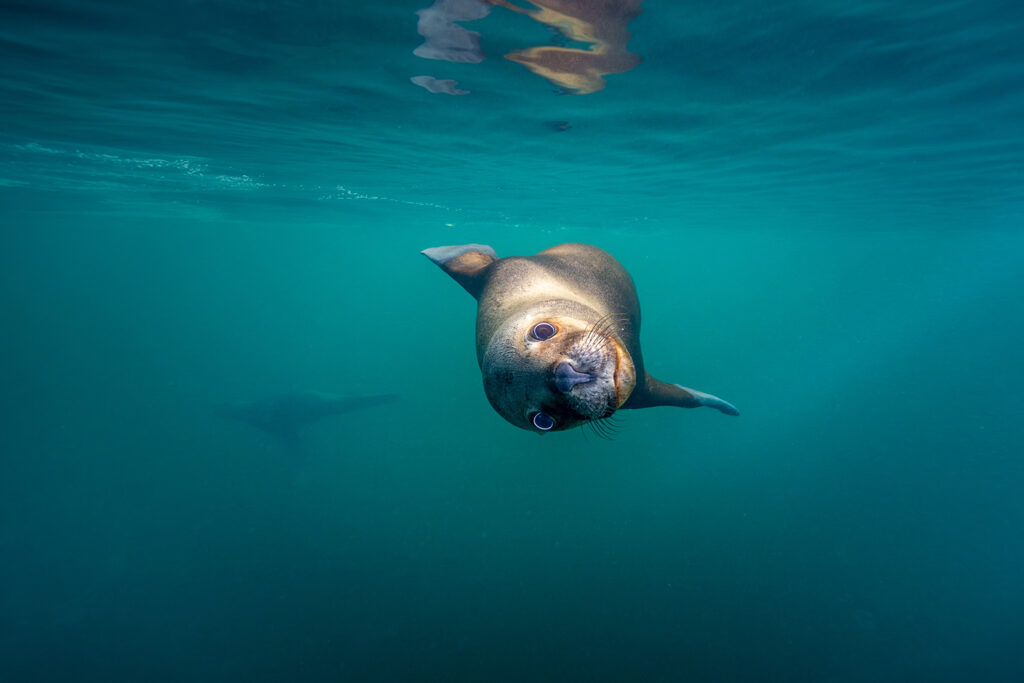
We will long remember our first encounter with a pod of orcas in the Beagle Channel. It was a windless day. We stopped the boat, and they stayed in front of us for an hour, eating a poor seal that happened to pass by. We were able to observe them up close; it was magnificent. We later learned that it is apparently quite rare to spot orcas in the channels.
You find yourselves many miles away from your home port in Paimpol, Brittany. Given the number of miles you’ve traveled at sea, is your desire to travel still as strong?
Oh yes! Perhaps even more so. We really enjoyed the long crossings and the small stops, but we’re happy to have arrived and to be able to take our time exploring Patagonia properly.
How has this adventure changed your perspective on the world and on sailing?
This journey has reinforced the idea that, no matter how slow and uncomfortable it might be, a sailboat is a wonderful way to explore the rare places still untouched by human activity. Our relationship with time has evolved. We have learned that, both in general travel and particularly by boat, it is important to take your time and be flexible. This not only allows you to adapt to weather changes but also to fully take advantage of the opportunities that arise along the way.
Is there a particular encounter that left a lasting impression on you?
Stops are always rich in encounters. We are sometimes invited aboard other cruising sailboats or to visit local homes, providing opportunities for exchanges and sharing that enrich our journey. Here in Patagonia, the locals are all very welcoming (and patient with our rather basic Spanish!). This is especially true in very remote areas, like during our recent visit to the Wollaston-Hermite archipelago, where we met local fishermen. We barely had time to greet them before they were offering us centollas (king crab) and octopuses. Talking with them, we learned that they work there, at the ends of the Earth, non-stop for 8 months before returning to their families.
What is the next stage of your voyage?
In a few weeks, we will leave Puerto Williams for a 2-3 month journey up the channels to Puerto Natales. We then plan to spend a few weeks in the region with friends, before continuing slowly along the coast to northern Chile. After that, we will cross over to French Polynesia and stay there to thoroughly explore the islands and replenish our supplies. But as they say, “on a sailboat, plans are written in the sand at low tide.”
Data TUPAIA
- Stats transat (Paimpol-Mar del Plata)
- Number of miles traveled : 6800 MN
- Number of days spent at sea: 102
- Number of anchorages: 13
- Fuel used: 80 liters
- Stats Patagonie (section Argentine + Beagle + Wollaston)
- Number of miles traveled : 1975 MN
- Number of days spent at sea: 102
- Number of anchorages: 58
- Fuel used: 450 liters (including 180 liters for heating)
- Tupaia's capacity:
- Water capacity 650L
- Diesel capacity : 400L
- Number of countries visited: 7 (Spain, Madeira, Canary Islands (Spain), Cape Verde, Brazil, Argentina, Chile)
To learn more about their adventure, preparations, or other details, feel free to contact Lauric Thiault directly on his Instagram @lthiaultYou can find more information about their expedition Lauric Thiault YouTube channel. link.
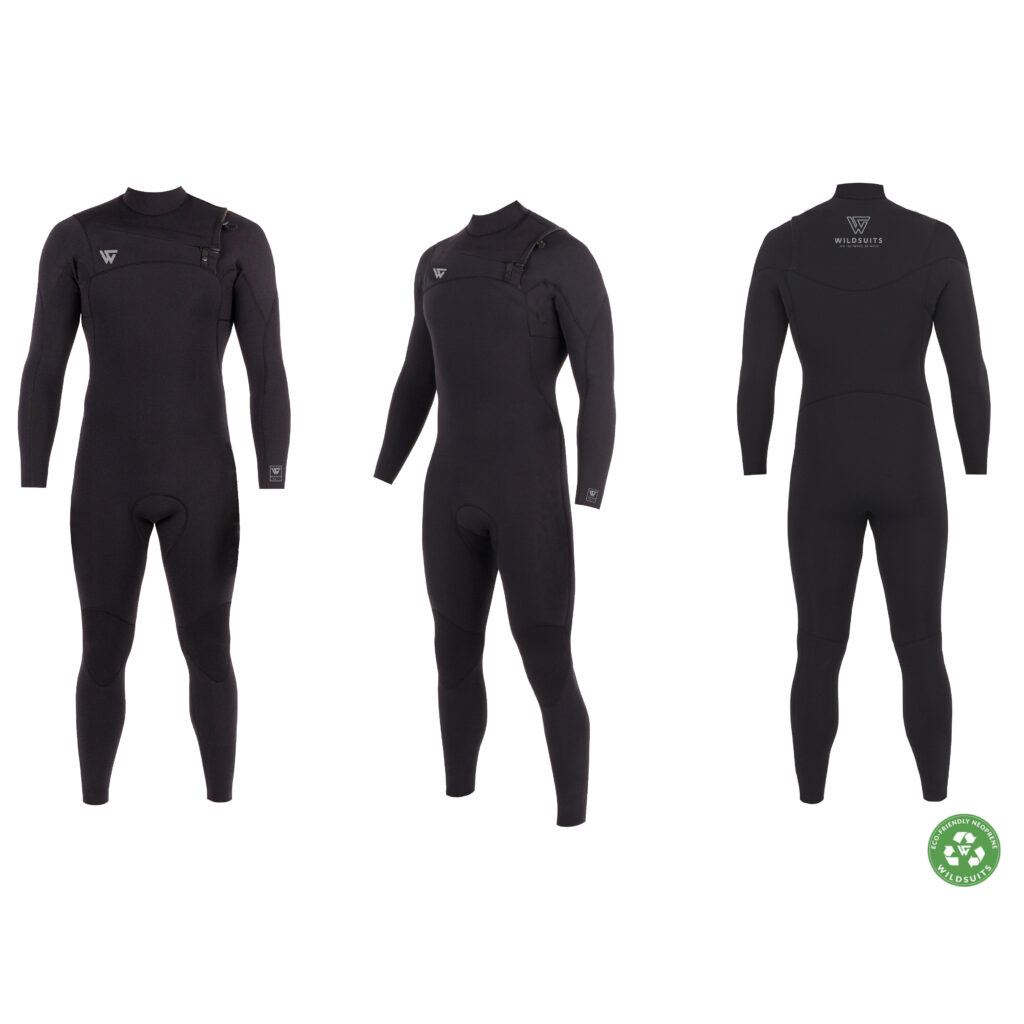
Also, check out our wetsuits that accompany Lauric and Nao during their expeditions in the "Wetsuits”.