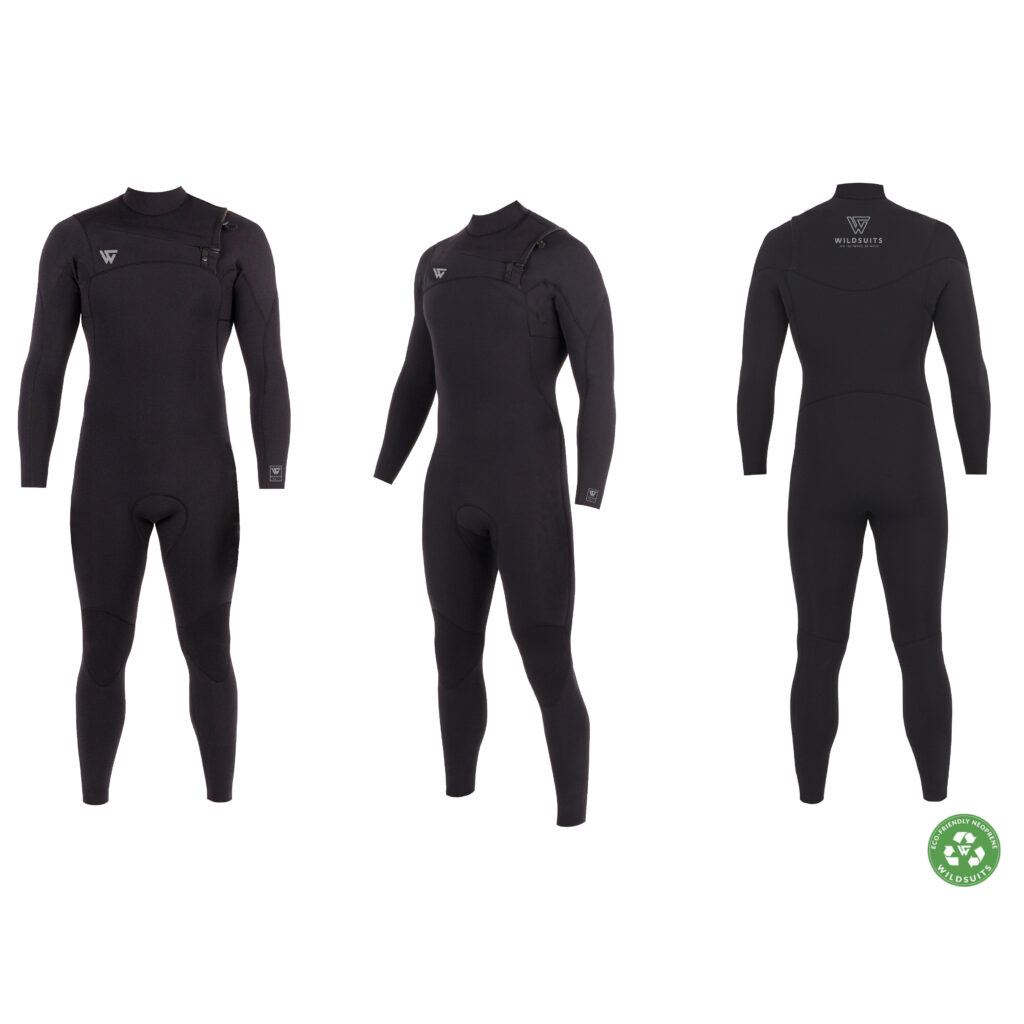
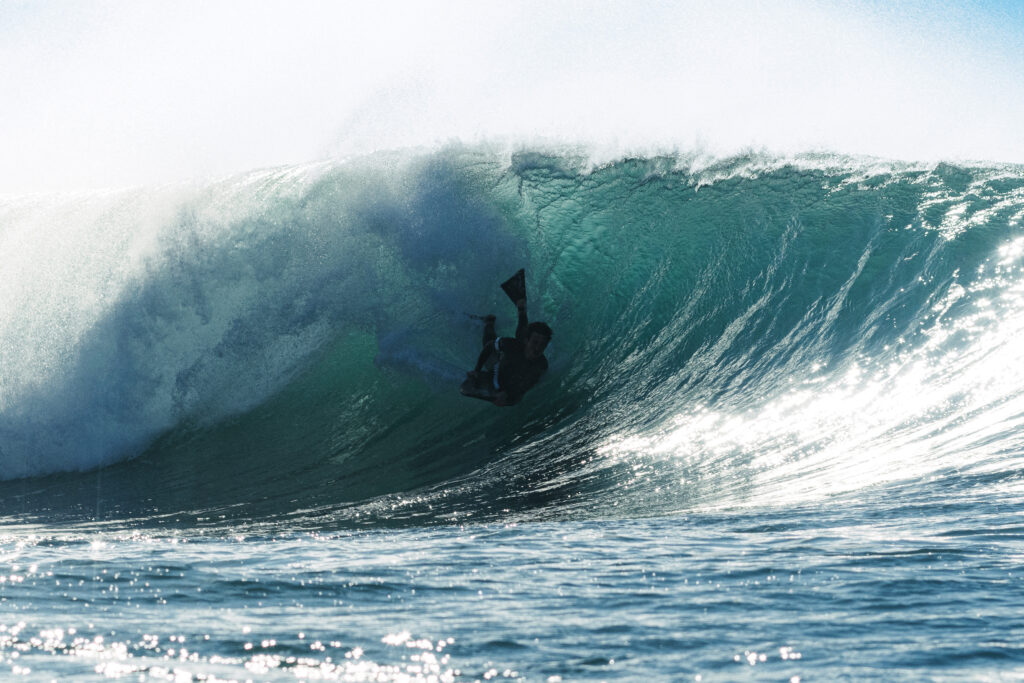
Picture this: you launch yourself onto a small board, lying flat as the sea rumbles beneath you like it has its own heartbeat. You kick hard, searching for THE perfect wave. And then… there it is! The wave picks you up, carrying you at full speed—maybe even tucking you into a shimmering barrel. That’s bodyboarding: the thrill of immersing yourself in the ocean and embracing the ride.
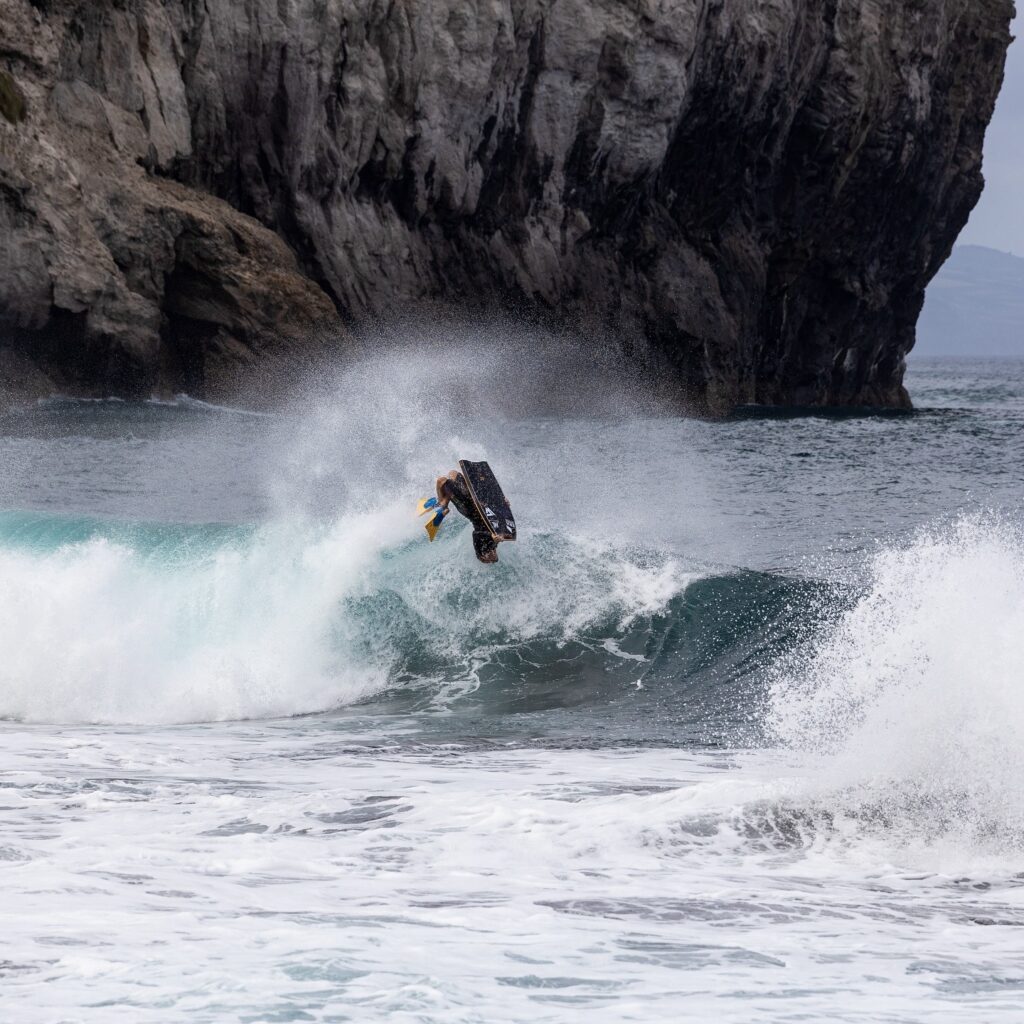

How It All Started
In 1971, on a Hawaiian beach, a man named Tom Morey had a revelation while staring at a piece of foam lying in the sand: “What if we surfed lying down?” Without hesitation, he grabbed the foam, shaped it, added some homemade tweaks… and just like that, the first “Boogie Board” was born. No need to stand up anymore—just a simpler (and for some, even more fun) way to play with the waves. The idea caught on instantly!
The Boom of the ’80s and ’90s
After these early, somewhat DIY beginnings, bodyboarding exploded in the ’80s and ’90s. Boards became lighter and more high-performance, and competitions started popping up everywhere. Surf magazines took notice of this “cousin” sport, and soon, the bodyboarding craze spread across beaches worldwide. The result? An accessible sport with spectacular moves and a laid-back vibe that still attracts wave riders today.
The Gear: Minimal, Just Pure Fun
To get started, you don’t need a van full of expensive equipment:
- The board: Between 90 cm and 1.20 m, made of lightweight foam. A “slick” bottom for speed and a crescent tail for maneuverability. Got questions? Reach out—we’ll connect you with one of our pro riders.
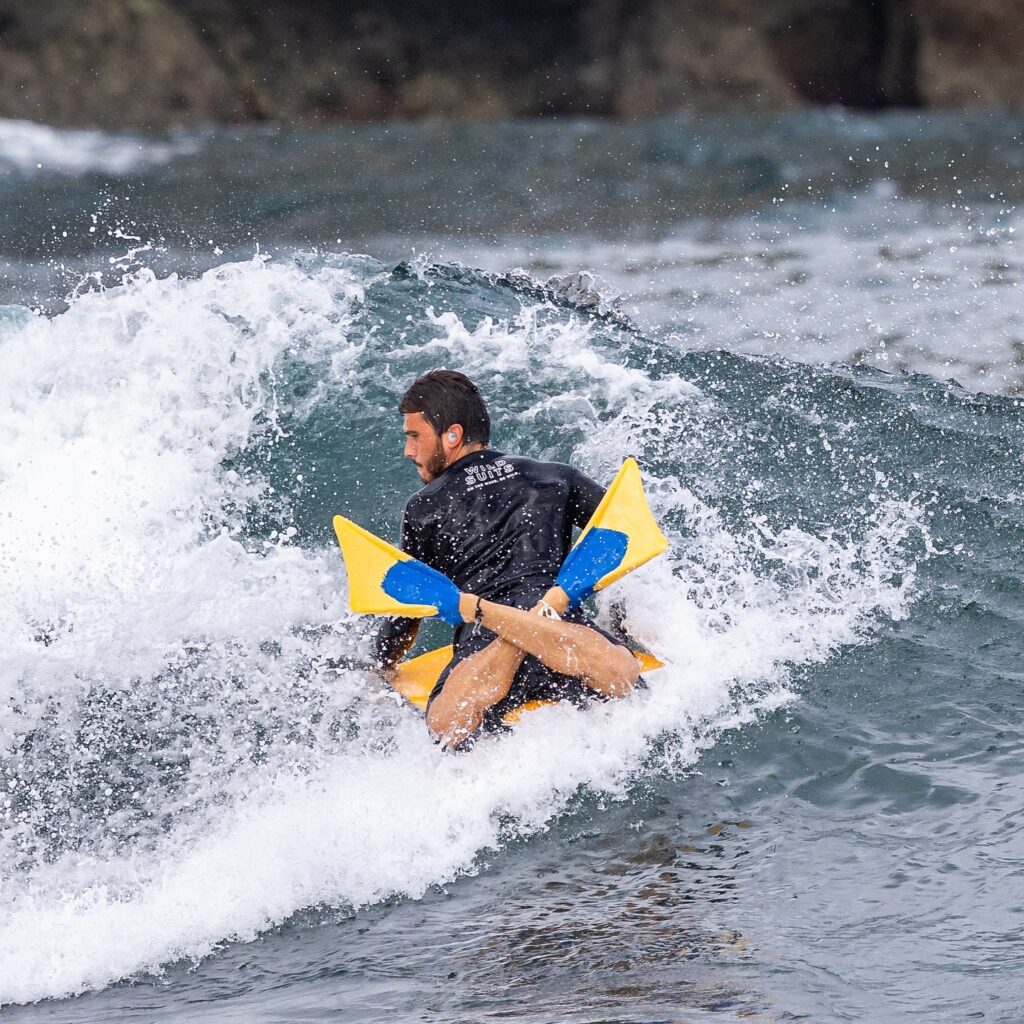
- Swim fins: Essential for boosting propulsion, making it easier to catch waves, and improving control for better maneuvering in the water.
- The leash: Keeps your board from drifting away or getting smashed on the rocks. It also helps you recover quickly after a wipeout, improving safety in the water.
- Everything fits easily into a car trunk or back seat. The cost? Way lower than many other board sports—so no more excuses about an empty wallet keeping you out of the water.
The Thrill of the Ride
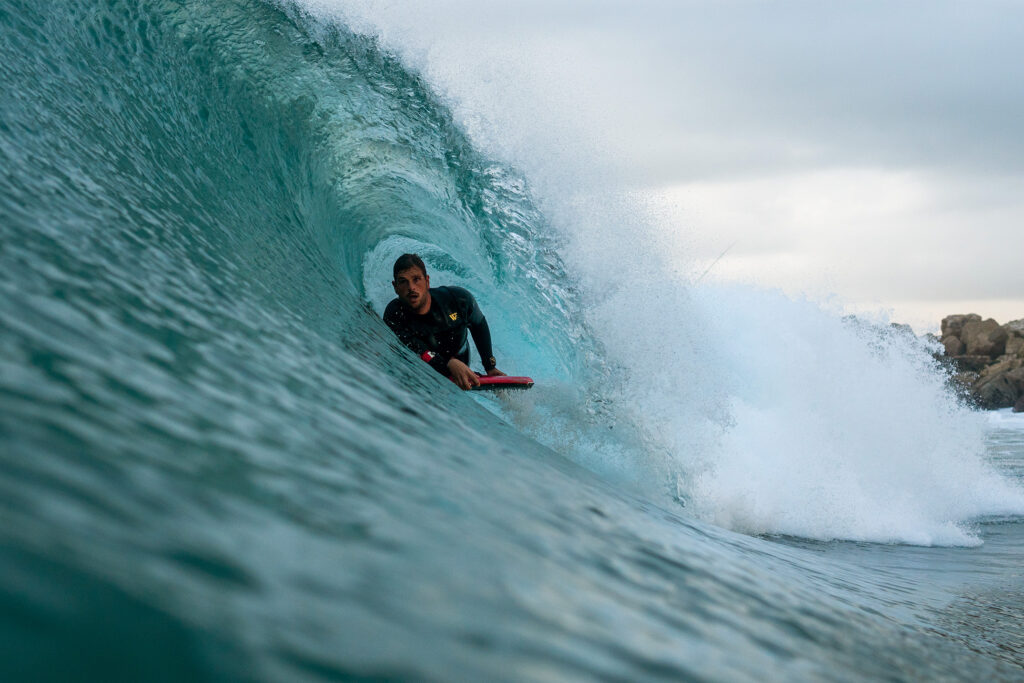
While surfing puts you upright for a panoramic view, bodyboarding literally glues you to the wave. The result? An instant fusion with the ocean—like an aquatic hug. You feel every bump, every turn, and when the wave picks you up, it’s like riding a magic (but wet) carpet. Tricks are more accessible: a quick 360, a drop-knee stance, or an “el rollo” ending in a dramatic splash… You can even tuck into a barrel without worrying too much about wiping out—an undeniable plus for those craving epic rides.
For Everyone
The best part? Anyone can do it.
- Beginners can start with small shorebreak waves to get the feel of paddling, kicking, and catching waves in sync.
A family-friendly sport: Kids often get their first taste of bodyboarding at a young age, while parents—already hooked—share waves and laughter together. Bodyboarding isn’t elitist or exclusive: you wipe out, you try again, and no one will judge you (except maybe a jealous crab on the shore).

Why the Future Looks Bright
More affordable than surfing, accessible, and insanely fun—bodyboarding has a promising future.
- Gear evolution: Boards are now more durable, lighter, and increasingly eco-friendly.
- Social media: Platforms are packed with insane bodyboarding clips, showcasing the new generation of riders pushing the limits.
- More competitions: Events are multiplying, attracting growing audiences and media interest in this high-energy sport.
Time to Dive In
Next time you hear the call of the ocean (or just get bored on the beach), give bodyboarding a try. No need to aim for a massive barrel right away—just a bit of practice, and you’ll already be feeling the rush of gliding across the water. That first sensation? Unforgettable. And chances are, you’ll be hooked.


Got a salty story, a wild experience, or a question on your mind? Drop me a message at Hello@wildsuits.fr I’m all ears!
Olivier Boileau.