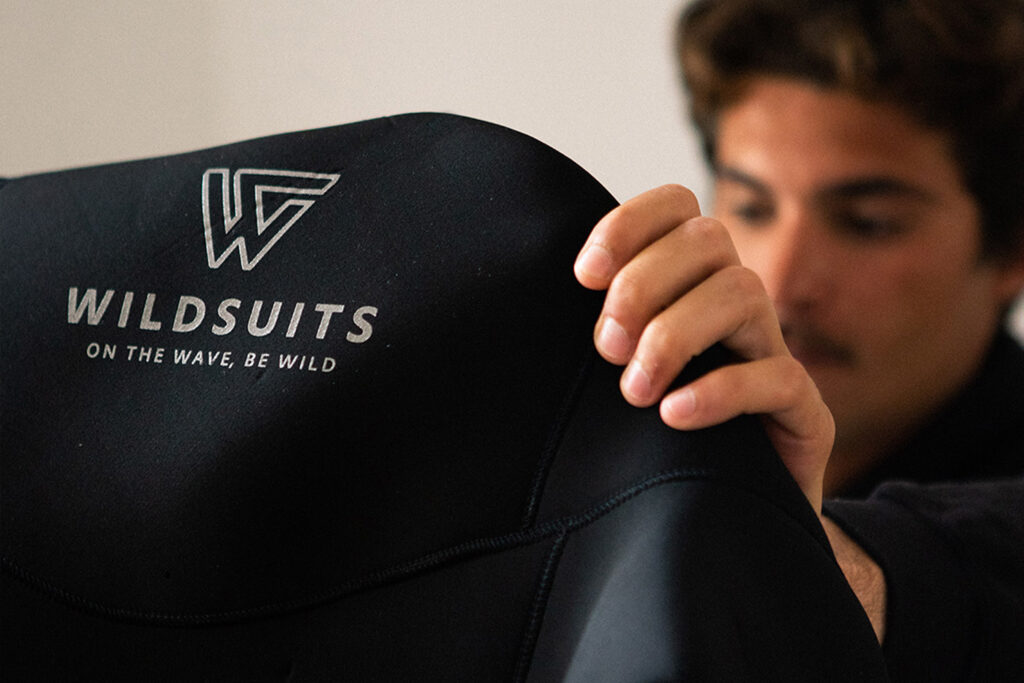
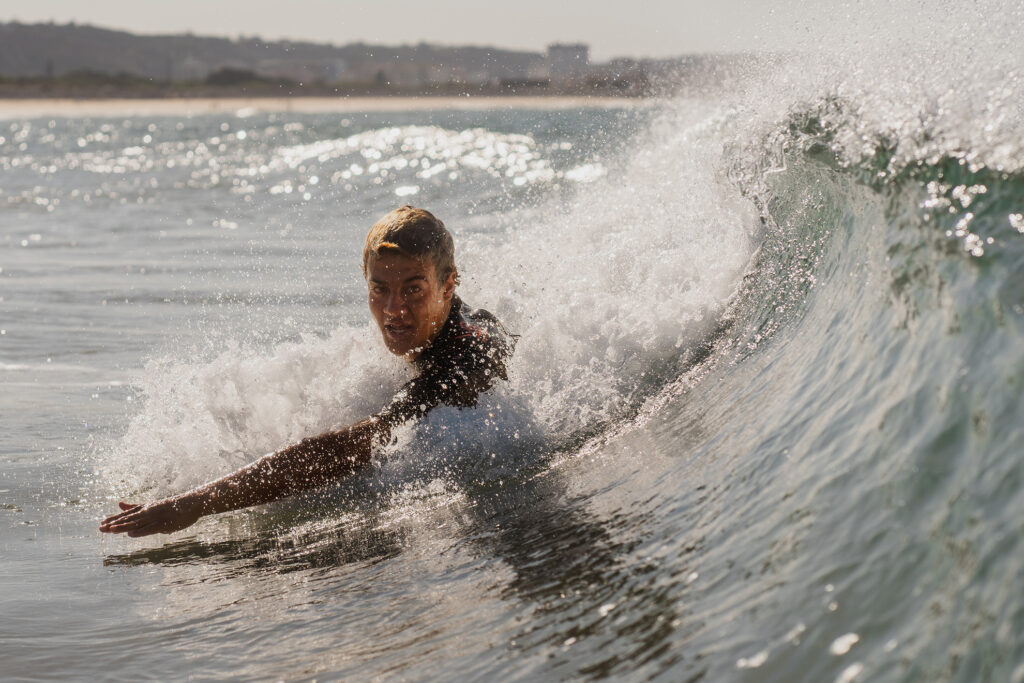
Your wetsuit is more than just gear, it's your trusted companion for every session. To keep it performing season after season, a few simple habits can make all the difference. From putting it on to drying, storing, and even repairing, every action counts to maintain its flexibility, waterproofing, and comfort.
At Wildsuits, we design eco-friendly wetsuits built to last. But for them to accompany you for a long time, proper care is essential.
In this article, we explain how to optimally maintain your wetsuit, avoid common mistakes, extend its lifespan, and even give it a second life when it's at the end of its journey, thanks to our neoprene recycling program.
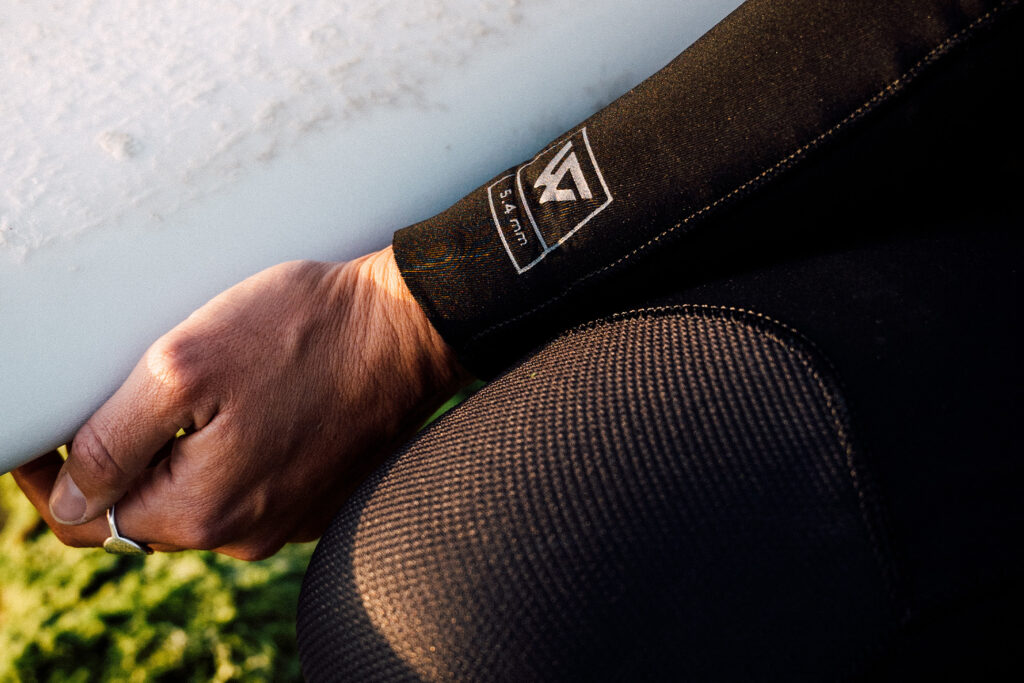
How to Put On and Take Off Your Surf Wetsuit Without Damaging It ?
Putting on and taking off your surf wetsuit can be critical moments where even experienced surfers can prematurely damage their gear. Stressed seams, mishandled zippers, overstretched neoprene—these seemingly minor actions can, over time, lead to cracks, tears, or loss of elasticity. However, with a bit of method and some tips, you can preserve your wetsuit season after season.
To help you put on your wetsuit without struggle (and without damaging it), a simple trick is to use plastic bags or socks on your feet: this reduces friction and allows you to slide into the neoprene more easily, without straining the seams. Once your legs and arms are in, ensure the fabric fits snugly, without folds, to avoid localized tension.
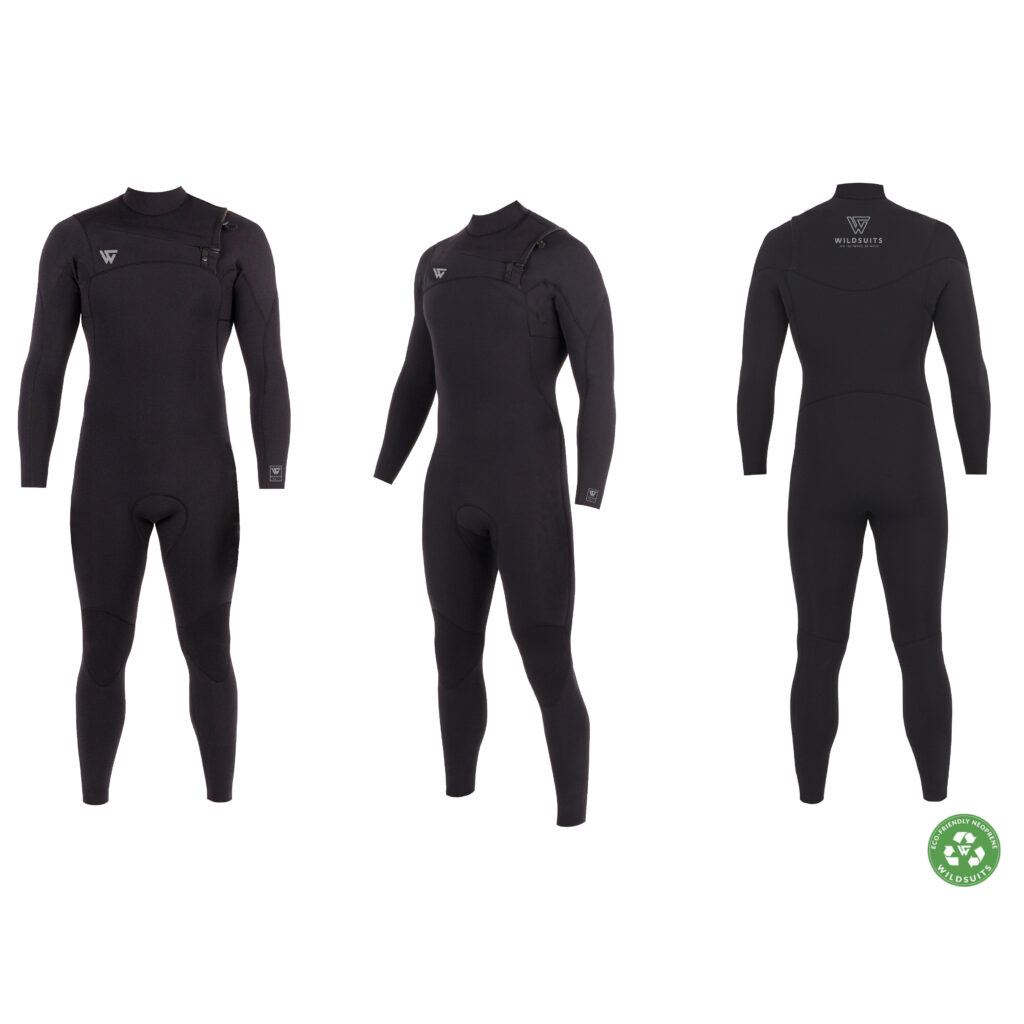
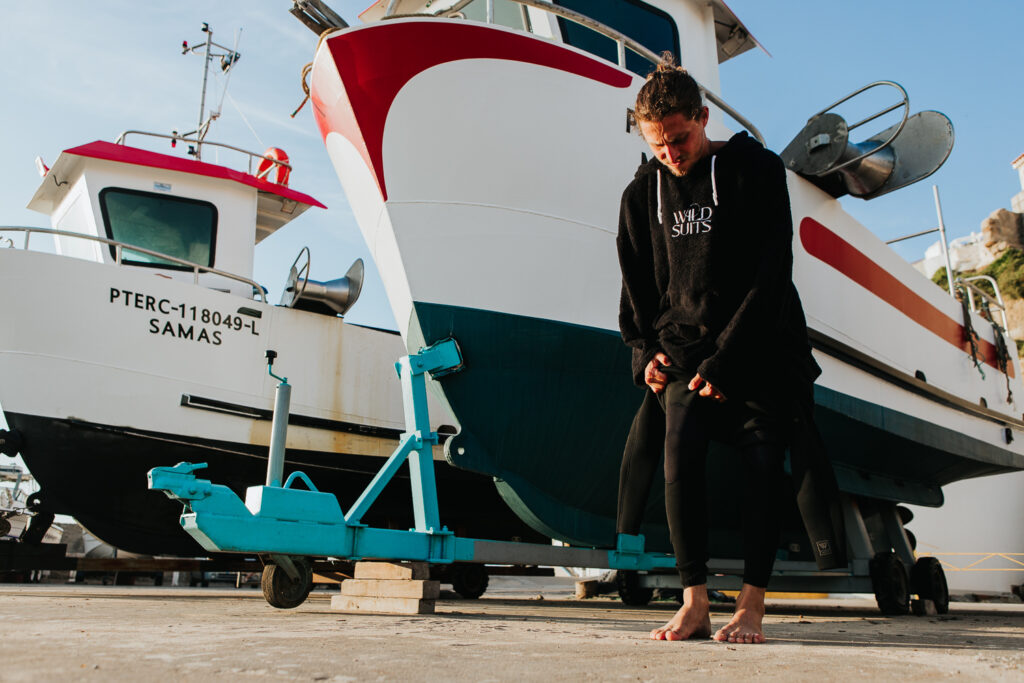
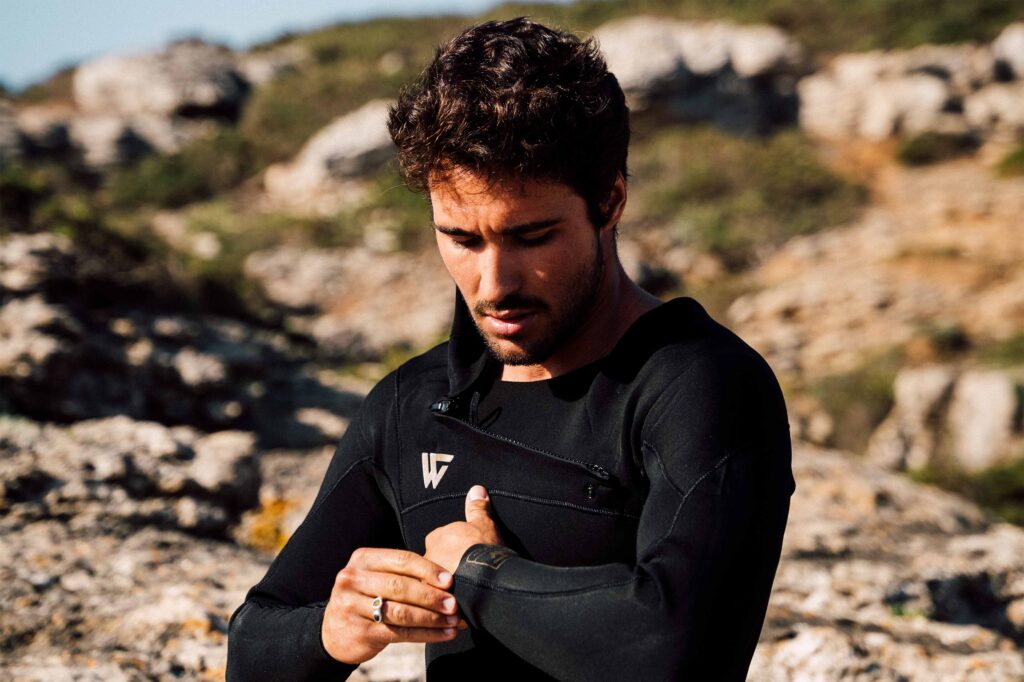
Removing your Wildsuits Front Zip wetsuit is a crucial step where the risk of tearing is higher, especially around the collar or zipper. To avoid unnecessary stress on the neoprene and extend your wetsuit's lifespan, it's essential to proceed carefully. Take your time, adopt the right techniques, and everything will go smoothly. Here are the steps to follow for gentle removal:
- Fully open the zipper before anything else. This gives you maximum range and limits twisting.
- Gently free the collar and head by pulling slowly, the neoprene is elastic and designed to be handled.
- First, free the left shoulder, as the Wildsuits front zip closes from left to right. This offers better maneuverability to remove the wetsuit without forcing.
- Then move to the right shoulder, and slowly lower the wetsuit down to the torso.
- Remove the arms one by one, first the left, then the right, always pulling gradually to protect the seams.
- Finally, remove the legs one at a time, rolling the wetsuit downward.
By following this routine each session, you reduce the risk of premature wear, avoid tears around the collar or seams, and extend your wetsuit's lifespan.


Extend the Life of Your Surf Wetsuit: Best Practices to Adopt.
Once the wetsuit is off, the job isn't over, quite the opposite. To keep your surf wetsuit in excellent condition for several years, a few simple actions make all the difference.
After each session, rinse your wetsuit thoroughly with clear, cold water to remove salt, sand, and impurities that can damage the neoprene.
Drying is equally crucial. Avoid direct sunlight and heat sources like radiators or hair dryers, which can cause rigidity, loss of elasticity, and waterproofing, as well as discoloration. Hang it inside out in a dry, well-ventilated area, then turn it right side out once the first side is dry. Don't leave the wetsuit crumpled and avoid hanging it by the shoulders on a hanger, as this can deform your wetsuit and create water entry points.

Twice a year, you can naturally disinfect your wetsuit using a mixture of white vinegar and water, or a small dose of fabric softener. This simple, effective, and environmentally friendly solution eliminates bad odors without damaging the neoprene. No need for special products, a good old-fashioned home remedy is more than sufficient. To maintain a pleasant smell, you can, in a second step, add a tablespoon of fabric softener, then rinse your wetsuit thoroughly. And above all, never put it in the washing machine (even on cold) or in the dryer, you'd be signing your beloved wetsuit's death warrant.
To transport and store your wetsuit between sessions, opt for a sac étanche or a dedicated bucket to avoid water leaks and keep your gear away from sand. Absolutely avoid leaving your wetsuit damp and crumpled in a car trunk, as this promotes mold growth, deteriorates the neoprene fibers, and reduces its longevity. And if you do this in summer, we won't even talk about the smell you'll create. But hey, to each their own...
During the off-season, make sure to rinse your wetsuit thoroughly with fresh water, let it dry completely in the shade, then store it flat or hung in a dry place away from heat. Proper storage extends your wetsuit's lifespan and ensures you find it in perfect condition for your next sessions.
By avoiding common mistakes like leaving it crumpled, damp, or exposing it to extreme temperatures, you certainly extend your wetsuit's lifespan.
Repairing a Torn Surf Wetsuit.
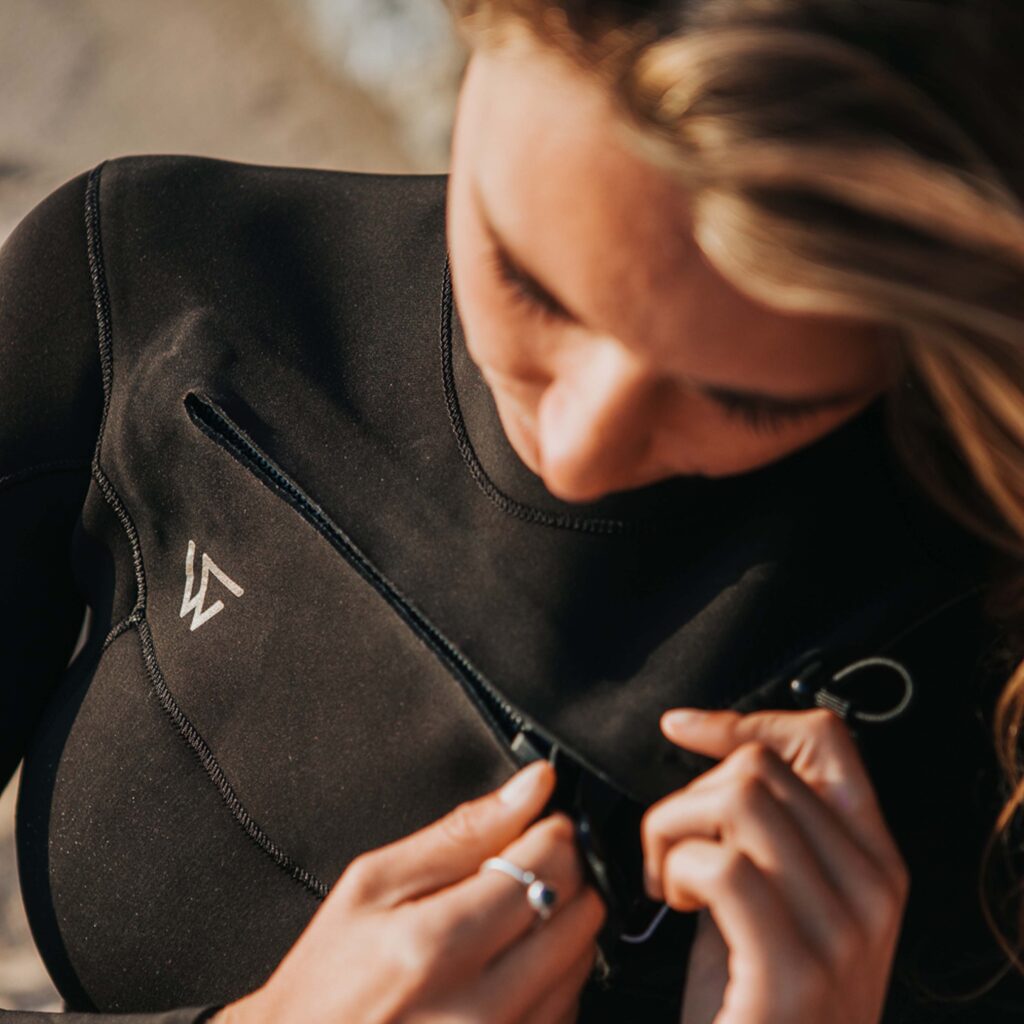
At Wildsuits, our wetsuits are designed to last, but like any technical equipment exposed to the elements, they may occasionally require minor repairs, especially after numerous intense sessions or heavy use. But good news: a slight tear or snag doesn't mean the end of your wetsuit's life! Repairing instead of discarding is an economical, sustainable, and eco-friendly approach, perfectly aligned with our vision of more environmentally respectful surfing.
At Wildsuits, all our wetsuits are guaranteed, so in case of premature tearing, contact our customer service. However, for other wetsuit brands, if the tear is too significant, it's advisable to seek a professional. In France, we recommend the services of Tearing Wavesa recognized specialist in high-end neoprene wetsuit repairs. They offer meticulous repairs with a premium finish, perfect for sensitive areas like critical seams, knees, or shoulders. This solution is ideal if you want to maintain or improve your wetsuit's technical performance without compromise.
On the other hand, if the tear is minor or superficial and you're a bit handy, it's entirely possible to perform the repair yourself at home. Wildsuits provides you with a detailed video tutorial available on our YouTube channel to guide you step by step through this repair.
The necessary materials are simple and easily accessible: quality neoprene glue, a fine brush, a few clothespins, some solvent, a lighter, and a pair of scissors are enough to perform a clean and durable repair.
By promptly repairing minor damages, you prevent them from worsening and significantly extend your wetsuit's lifespan. It's also a strong gesture towards reducing neoprene waste and overconsumption. At Wildsuits, we believe that well-maintained and repaired equipment is equipment that surfs longer... while respecting the environment.
And When Your Wetsuit Truly Reaches the End of Its Life? Think Recycling..
Even the best-maintained and carefully repaired wetsuit eventually reaches the end of its lifecycle. But that doesn't mean it has to end up in the trash! At Wildsuits, our commitment to sustainable surfing doesn't stop at producing eco-friendly wetsuits, we also take action after their use.
In 2017, we launched a neoprene recycling program in collaboration with Flahica. Today, through the Wildfactory, we have the means to become a major player in large-scale neoprene recycling, whether from surf wetsuits or other neoprene products. This partnership allows us to reuse unsold, used neoprene and manufacturing "waste" through an innovative process: sorting, grinding, lamination... until we obtain new sheets of recycled neoprene.
Thanks to this process, old wetsuits find a second life in new forms: yoga mats, bracelets, jackets, or other useful accessories. This approach significantly reduces neoprene-related waste, a material difficult to process through conventional channels. Concretely, we collect wetsuits from surf schools, surf shops, or through local initiatives to "close the loop" of the product's lifecycle. By entrusting us with your old wetsuit, you actively participate in a circular model that's more environmentally friendly and true to the values of the surf community.


What If You Choose a Wetsuit Designed to Last ?
At Wildsuits, each wetsuit is designed to offer you performance, comfort, and durability while respecting the environment. Whether you're a regular surfer, a coastal walker, or simply a fan of summer sessions, our complete range of eco-friendly wetsuits meets all needs. You'll find 3/2, 4/3, or 5/4 mm models to accompany you year-round, as well as Shorties, Long Johns, neoprene tops, or even our model with an integrated hood for the coldest waters. Recently, we've also developed perfectly fitted cuts for women, always with the same focus on technicality and ethics.
Designed to withstand, tested in the most demanding conditions, and made with recycled materials, our wetsuits are more than just gear—they're a commitment to cleaner surfing. So if you want to combine the joy of riding, comfort, and reduced environmental impact, it might be time to join the Wildsuits community.