There it is, you've seen enough videos of Kai Lenny, or perhaps it's the new practitioners enjoying the smaller conditions near you that have convinced you to try Surf Foiling. However, it's not that easy, especially in the beginning during the first sessions. It's essential to have the right equipment and proper guidance to get started, but most importantly, to find suitable wave conditions for flying safely. For that, you need to find the perfect spot near you.
We might not know the spots in your area, but we are fairly certain that there are excellent foil spots hiding, away from the crowd and perfect for beginners. This article will provide you with some keys to find your surf foil spot. To illustrate this, our team rider Martin Letourneur was recently on a surf trip to Lanzarote in the Canary Islands. He went in search of waves suitable for Foiling and will explain how he chooses his surf foil spots later on.
1) Why did you decide to try foil surfing?

For a few reasons really. To try something new, to discover new sliding sensations, to be able to have fun in 30cm soft waves. These are all reasons that push more and more surfers to try foil surfing. With my studies, I often move around and I’m not always in the best areas to surf. Foiling allows me to take advantage of all conditions and maximize my time in the water. And then there’s also the sensations of the foil and the speed of progression which I find really exhilarating. But obviously when there are good waves I always prefer surfing!
:)
2) What type of waves suit what level of foil surfing?
The type of wave can be different depending on your level. When you're a beginner, you need small, slow, long, and less powerful waves with a well-defined breaking zone and few people around. Once you master Surf Foiling Surf Foilit remains the same. However, you can take more risks by riding more powerful waves that break faster. Nevertheless, you will always look for very long waves that reform with relatively precise breaking zones.
3) What characteristics should you look out for at a foil surfing spot?

- The size of the waves: The size of the waves: As mentioned above, the waves should be small, soft and long. To begin with, don’t go out in waves over 80cm, otherwise you increase the risk of injury. For experienced riders, waves from 30cm to 1m50 are manageable as long as you are able to handle the take-off.
- The ocean floor: You will need a depth of at least 1m20 (1m for a 65cm mast) at takeoff point. As long as there is 1m20 below you, the bottom can be rock or sand if the foil is not likely to touch. If you are worried about your equipment, remember that the advantage of a rocky bottom is that it is easier to identify where the waves will break. If the ocean floor is sand it’s best to go to the edge of the sandbank to fly over the waves once you’re riding.
- Current and wind: Be careful with the current. As you need to be well placed for the take-off, it is dangerous to start in conditions with a strong current which will require you to constantly reposition yourself. The wind can make the take-off more difficult if it’s onshore, and can make it difficult to catch the wave if it’s coming offshore (soft waves doubling).
Martin Letourneur’s advice
By observing well, you can see from the shore if there is enough depth at a spot to practice foiling. To do this you have to observe the water movements around the surf area, the proximity of the surrounding land and especially the size and shape of the wave. For example a very soft wave of 60cm, as pictured below, which has no swell around its surf zone indicates to me that the spot is a good place to practice foiling. Obviously, you should avoid peaks with surfers, just take a surfboard out if it’s busy.
4) Getting into the water safely
To get into the water, I usually walk with the surf foil upwards until about I’m about 1m20 deep. If the bottom is rocky or there is a risk of slippery algae or sea urchins, I row on my board with the foil upwards until I reach a sufficient depth to tip the foil over. It’s important to take a good look at the bottom when you’re rowing, sometimes you think there’s enough depth and then suddenly you come to a sandbank or a rocky slab, try to stay on the edge of these areas.
5) Rules to follow for more safety

If you’re a beginner I’d recommend wearing a helmet, boots and an impact jacket. Again, especially when you’re just starting out, don’t practice among surfers as it’s very dangerous for both you and for them. From this article you’ll hopefully now know how to identify a good wave for foil surfing, but the best thing to do is get a qualified teacher to show you the ropes. When choosing your kit you also need to have the right equipment for your level and build. For example, I am 1m78 / 72kg and I started with a foil with a surface of 1250 square centimeters. If you’re lighter it’s ideal, but if you’re heavier you should go over 1500cm².
Advice from martin
For example, I am 1m78 / 72kg and I started with a foil with a surface of 1250 square centimeters. If you’re lighter it’s ideal, but if you’re heavier you should go over 1500cm².
6) Which wetsuit do you use when foil surfing?

Martin:
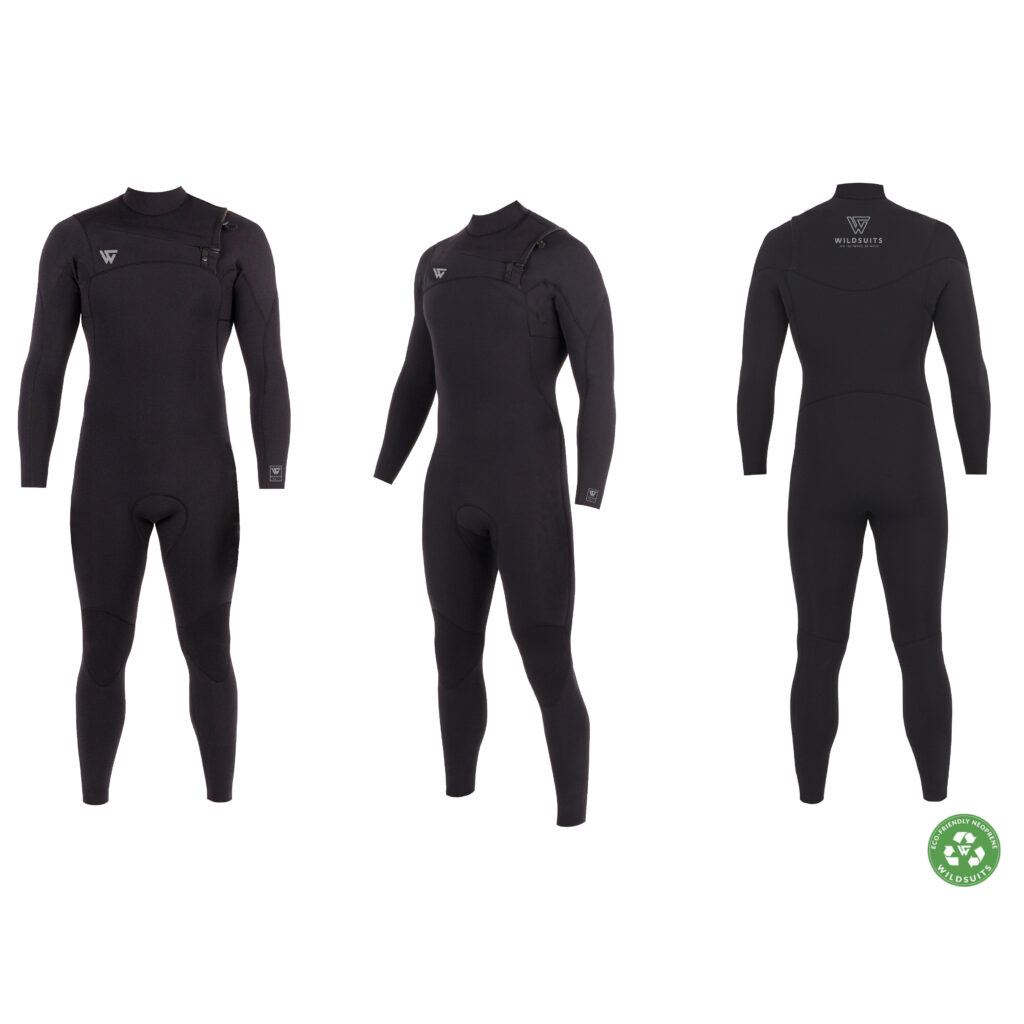
I joined the Wild Family recently, mostly because I support its environmental approach to the neoprene industry. I use the 3/2 Wildsuits wetsuit in waters between 14°C and 20°C when foil surfing, and in all conditions when I’m foil SUPing too. In both foil surfing and SUPing you need elasticity and lightness to perform but also warmth to prolong the sessions. The 3/2 Wildsuits wetsuit is ideal for me whether in Brittany, the Mediterranean or on a surf trip to the Canary Islands...